
Policy library · Kaspelon

Browse published policy manuals and procedures

Every document in this library lists its current version, its review interval, and the date it was last confirmed. Use the topic folders to browse, or the type index to jump straight to a policy manual, procedure document, standard, or form.

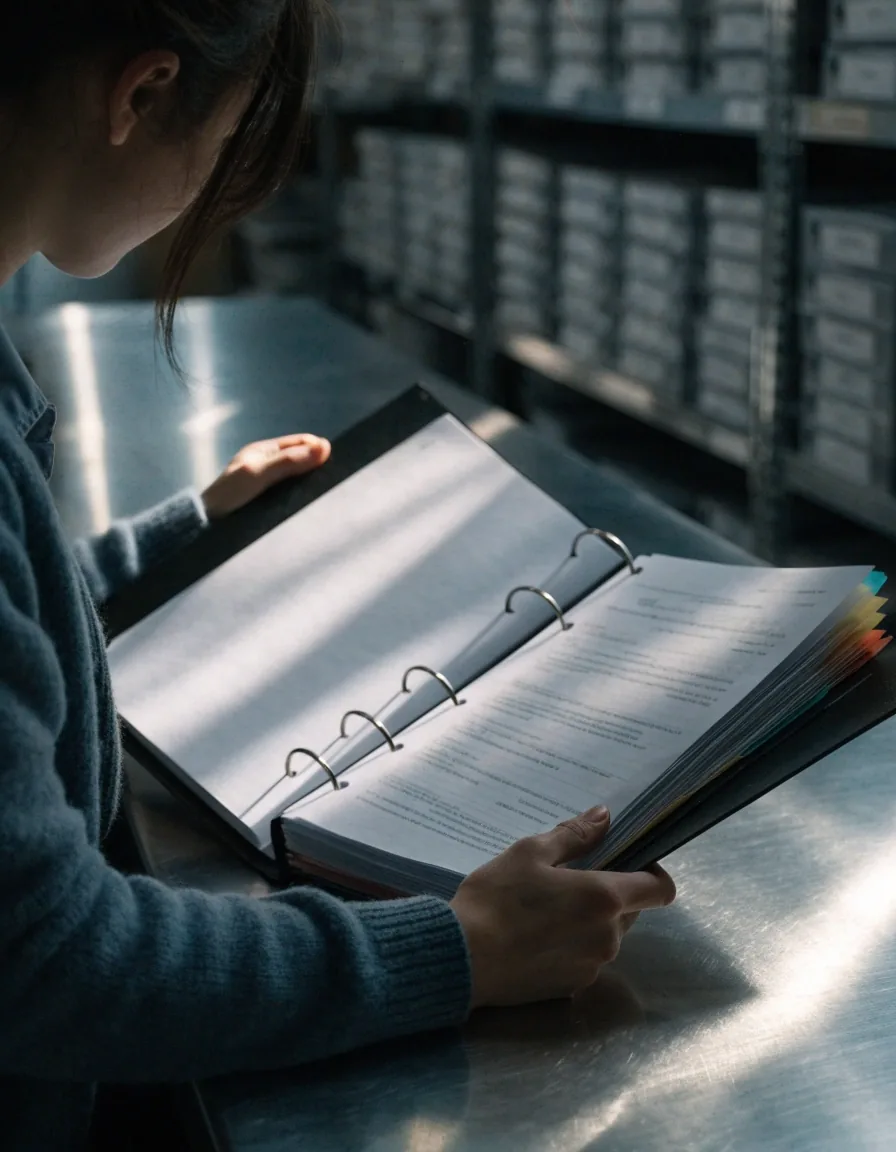
Reading room plate · the library before indexing

An open three-ring binder with blank pages resting on a steel workbench in cool daylight

How the library is organized

Documents are grouped by topic first, because that is how people ask for them, and by document type second, because that is how authors write them. Every topic folder separates the same four types so a reader can move from rule to execution without a second search.

Type 01

Policy

What is required of the organization, who owns it, and which exceptions apply.

Type 02

Procedure

How the work is actually done, step by step, and which evidence each step produces.

Type 03

Standard

Format, technical rules, and the naming conventions that keep the library consistent.

Type 04

Form

Fillable records linked directly from the procedure that requires them.

In practice, that means a reader looking for a records retention rule lands in Records → Policy, while the person tasked with destroying files lands in Records → Procedure. Same topic folder, two very different documents, each written for its own audience.

Policy documents

Policy manuals state the requirement

A policy document states a requirement and identifies who owns it, who it applies to, and what exceptions exist. These are the shortest documents per page in the library, deliberately. A policy that runs past five pages usually means procedural detail leaked into it, and that detail belongs in a separate procedure document.

Each policy manual entry here links to any procedures written under it, so you can move from rule to execution without a second search. When a policy is superseded, the entry stays in place with a link to the replacement rather than disappearing.

Procedure documents

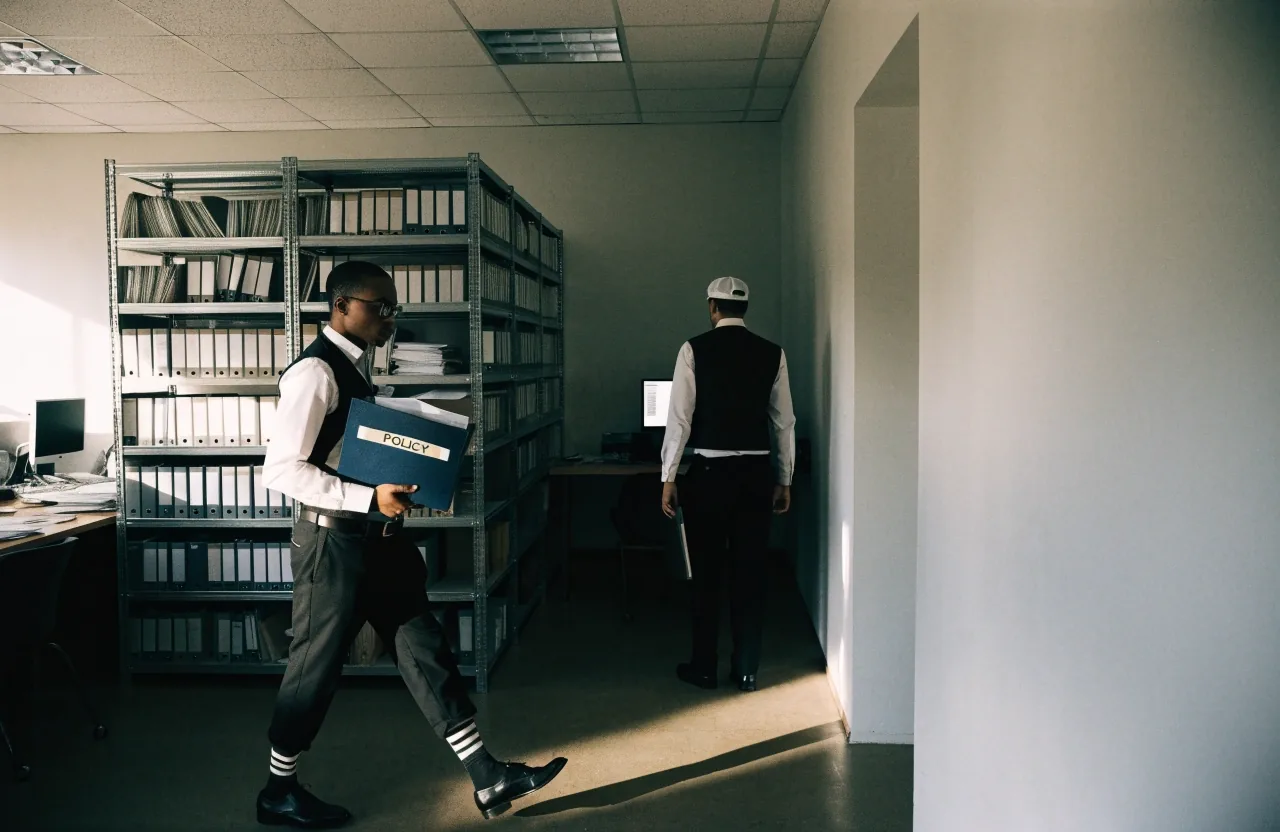
Procedures are written for the person doing the work

Procedures are written for the person performing the task, not the person governing it. They name the role, list the steps in order, and state what evidence the step produces: a record, an approval, a signature, a logged entry.

When a step has a decision, the branch is written out rather than implied. If a procedure references more than two other documents, we flag it for review, because that is a sign the content should be consolidated or split.

A closer reading of the format families

Three plates
A single closed policy binder standing upright on a bench under cool daylight
A policy manual, bound once and updated by revision note instead of a reprint.
A hand leaving frame above a stack of blank stapled procedure pages on a steel bench
A procedure document, stapled in steps, each step carrying its own evidence line.
A fine-liner pen tip drawing a single hairline rule on blank paper under raking daylight
A documentation standard, drawn as a rule before it is ever written as a sentence.

Clear-space unit · 8px ladder

Heading hierarchy
1 / 2 / 3, no skipped levels
Type sizes
One scale, fixed by role
Alignment
Left rail, ragged right
File naming
Topic, type, then version

Standards and style guides

The standards shelf is smaller and more technical. It holds the documentation standards used across the library: heading hierarchy, spacing, alignment, type sizes, and naming rules. It also holds the policy writing guidance and the information architecture conventions that decide how a top-level folder earns its place.

These aren't policies in themselves. They are the rules that keep the other documents consistent, and they are published openly so anyone editing a policy manual in another organization can apply the same conventions without reverse-engineering them from a finished PDF.

Searching versus browsing, and how version labels work

Search path

Search returns a ranked list of documents and sections, and it recognizes common synonyms — for example, "supplier" will surface "vendor" entries, and "employee handbook" will surface the conduct policy group. Search suits readers who already know the vocabulary of the library.

Browse path

Browse mode opens one folder at a time, which is slower but better when you don't yet know the vocabulary. Each folder shows its policy, procedures, standards, and forms in that order, so a reader can trace the chain from requirement to record without a second query.

Status labels on every entry

Nothing is quietly removed from this library. If a document existed, someone will eventually search for it.

Current
The version in force today. Reading this one is safe by default.
Under review
Still readable, but the review interval has closed and a revision may be imminent. Check the review note before citing.
Superseded
Old text kept visible with a link to its replacement, because citations in older material still point at it.
Withdrawn
Held in a separate archive folder with the date it was withdrawn and, where available, the reason.

Reading a document entry

An entry page follows the same four-part order regardless of topic. That consistency is the point: a reader who has opened one policy manual knows exactly where to look in the next one. Nothing is buried in a collapsed section, and nothing changes position between document types.

  1. 01 Version note first: what changed in the last revision and when.
  2. 02 The document itself, set to the format standards.
  3. 03 Its cross-references, listed at the bottom, each naming why the link exists.
  4. 04 The review interval and the date the office last confirmed it.
A hand resting on a blank binder spine beside a steel rule on a work table

Cross-references are listed at the bottom so the body stays clean, and each one names why the link exists — dependency, definition, or exemption. That last detail saves readers from opening four documents to discover the one that actually governs their question.

Archive · withdrawn and superseded

Older documents stay here, dated and reachable

Withdrawn and superseded documents live in a separate archive folder with their withdrawal or replacement dates. Keeping them visible is a deliberate choice, because a reader confirming what changed needs to see both the current text and the one it replaced.

A superseded policy manual keeps its old version note so a citation from previous training material can be traced.
A withdrawn procedure document is filed with its withdrawal date and, where it exists, the replacement's folder location.
A superseded standard keeps the type scale and naming rule it previously enforced, so older documents still validate against their own era.

Request routing

Request a document that isn't here

Not every internal policy belongs in a public library, and some material here is deliberately general rather than organization-specific. If you need a document on a topic the library does not cover, describe the topic and the audience in the contact form. Requests inform what gets drafted next.

Requests don't generate instant custom documents, and we won't pretend otherwise. Missing synonyms search terms are treated as library defects too — if you expect a term to be findable and it isn't, say so.

Office details

Kaspelon Policy & Documentation
1600 Pennsylvania Avenue NW
Washington, DC 20500
Hours:
Monday to Friday, 9:00 AM – 6:00 PM (Eastern Time)

Questions readers ask about the library

The two below come up often enough to publish here. Anything else is worth a message through the contact page.

Can I use these documents as templates?

Yes, the structure and formatting conventions are published so other organizations can apply them. Replace the content with your own requirements and have counsel review anything legally operative.

Why do superseded documents stay in the library?

Because older citations still point at them. Hiding a superseded policy makes it harder for a reader to confirm what changed and when.

A wide wax-room workbench in hazy afternoon light with a closed blank binder at the far end

The library is updated on the review intervals printed in each entry. If you have a version of a policy manual or procedure document that should be checked against the published text, start with the document's version note and cross-references before reaching out — half of the questions we get are already answered by the entry itself.

Browse · Search · Read · Cite